
Published on: 11 May 2026
To mark International Nurses Day on 12 May, Derbyshire Healthcare NHS Foundation Trust is celebrating the dedication, compassion and impact of its nursing workforce. The annual awareness day recognises the vital role nurses play in supporting patients through some of the most challenging moments in their lives. 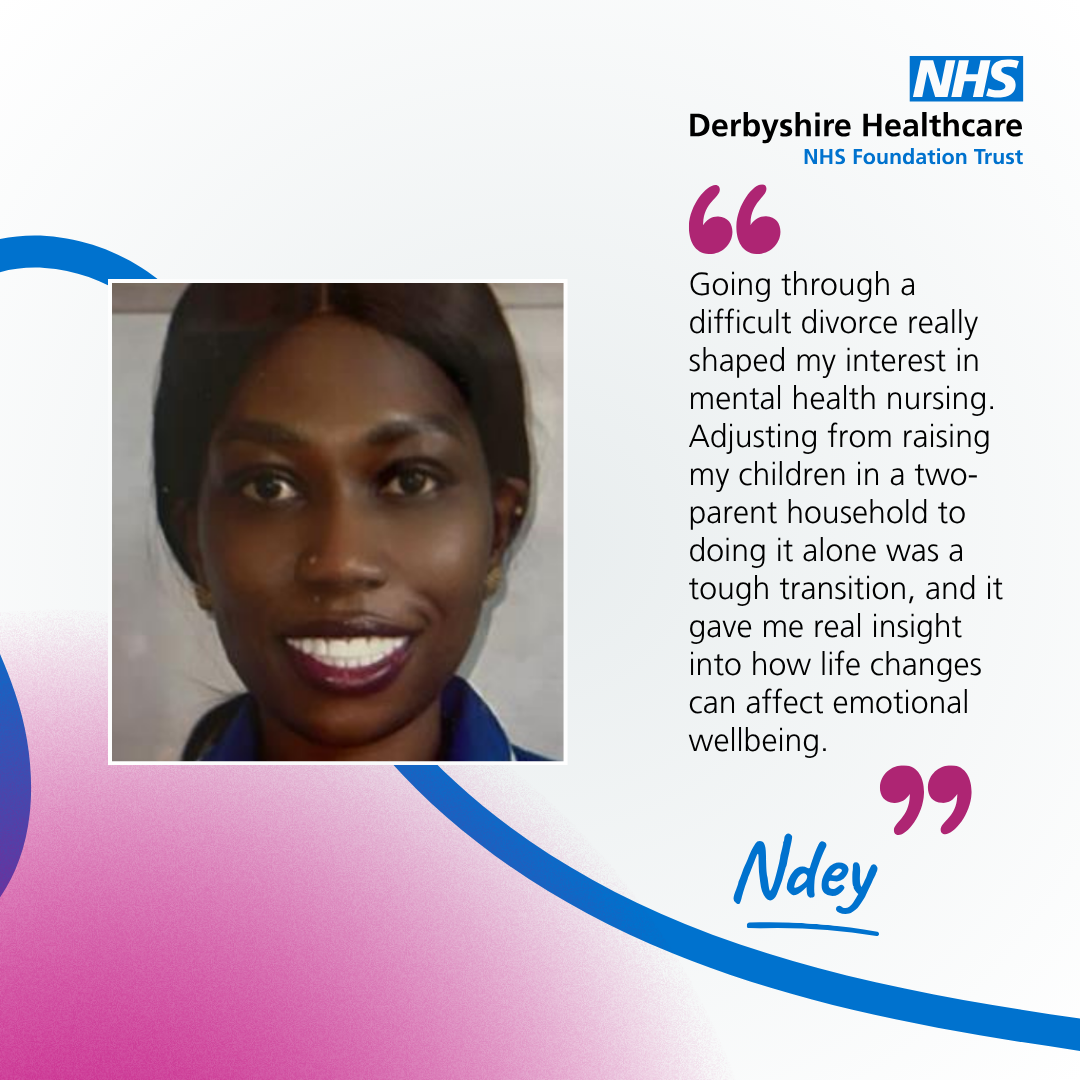
As part of this, the Trust is spotlighting Ndey Jagne-Gagigo, a Mental Health Nurse at the Carsington Unit in Derby, who qualified in November 2024. Ndey explains how personal experiences inspired her to pursue a career supporting others with their mental health and wellbeing.
What inspired you to become a nurse?
Going through a difficult divorce really shaped my interest in mental health nursing. Adjusting from raising my children in a two-parent household to doing it alone was a tough transition, and it gave me real insight into how life changes can affect emotional wellbeing.
That experience showed me how important support and reassurance are during challenging times, hence why the phrase “you’ve got this” really resonates with me. It is something I believe can make a real difference to someone who is struggling.
That is what inspired me to pursue mental health nursing, to support others through difficult periods and help them feel more confident and understood.
How long have you worked in nursing, and where did your career begin?
I have been qualified as a Mental Health Nurse since November 2024. My journey into nursing began when I worked a night shift at CAMHS in Leicester as a Healthcare Assistant. That experience really opened my eyes to the impact mental health support can have, and it stayed with me.
After that, I did a few more agency shifts, which reinforced my interest in the field and confirmed that this was the path I wanted to pursue. That is what led me to go on and complete a MSc in Mental Health Nursing.
What has been the most rewarding part of your nursing journey so far?
I would say the most rewarding part has been seeing the change in patients over time. Often, they come onto the ward very unwell, and sometimes they do not have much insight into why they are there. Being able to support them through that initial stage, build trust, and gradually see them start to understand their situation and engage with their care is meaningful.
Moreover, what stands out most is when they are feeling much better and take the time to thank you for being part of their recovery. Moments like that stay with you and further reminds me why I chose this field.
Is there a moment in your career that you are particularly proud of?
Yes, a few moments come to mind. I was proud of being involved in the discharge of my very first named patient for it was rewarding to see their progress from admission through to recovery and know I played a part in that journey.
I was also grateful to receive a DEED winner of the Month award last year, and to be nominated to attend the Royal Garden Party in May. Both felt like meaningful recognition, but for me, the biggest reward is always seeing patients improve and move forward. This does really make me proud of myself and how far I have come in my journey.
Can you describe your current role and what a typical day looks like?
A typical day involves in no order, handover at the start of the shift, reviewing the ward’s safety and any changes in patients’ presentation, and prioritising care based on risk and need. Throughout the day, I am involved in medication administration, Ward rounds, and supporting patients through one-to-one sessions to help them manage their distress and work towards recovery.
A big part of the role is also maintaining safety on the ward, working closely with the wider multidisciplinary team, and supporting patients with activities of daily living. No two days are ever the same though, but the focus is always on providing safe, compassionate, and person-centred care.
What difference do you feel your role makes to patients or colleagues?
I do feel my role does make a real difference in both patient care and team support. For patients, especially when they first come onto the ward very unwell, I can provide stability, reassurance, and consistency. Building trust is a big part of it as well as helping them feel safe enough to engage, even when they may have little or no insight at the beginning of their admission. Therefore, seeing that progress over time, and patients starting to understand their situation and move towards recovery is great.
For colleagues, I think my role contributes to maintaining a safe and supportive ward environment, an effective communication, teamwork, and being reliable on shift all help the team function effectively. I also try to support new staffs and student on placement as well as working collaboratively with our MDT, which further helps ensure patients receive consistent and high-quality care.
What do you enjoy most about working in your team or service?
What I enjoy most about working in my team is the strong support and collaboration across all levels of the service. Starting with the leadership team, I feel they are approachable and supportive, and they have created an environment where staff feel listened to and valued.
Our admin also plays a vital role in keeping everything running smoothly behind the scenes, which helps us as clinicians focus on patient care.
And working day-to-day with the nursing assistants is something I really value. They are a vital part of the team, often spending the most time with patients, and their input is essential. There is a real sense of teamwork and mutual respect, especially in busy or challenging shifts.
Overall, it is that whole-team approach from leadership through to frontline staff that makes the service feel supportive and effective to work in.
What advice would you give to someone starting a career in nursing?
My advice would be to stay open to learning and not be afraid to ask questions. Nursing is a continuous learning process, especially when you first starting. It is important to build confidence step by step rather than expecting to know everything straight away.
I would also say focus on building good relationships with your team and your patients. On a mental health ward in particular, communication and teamwork are essential, and having a supportive network around you makes a big difference.
Finally, I would encourage them to look after themselves and reflect on their experiences regularly. The role can be a very rewarding but also emotionally demanding, so having good self-awareness and utilising supervision and support systems is important.
What helps you stay motivated during busy or difficult periods?
I stay motivated by focusing on patient care, staying organised, and supporting my team. I also try to keep morale up by bringing a positive attitude and encouraging others, simple things like saying ‘we’ve got this’ can really help during busy shifts.
How do colleagues and teams support each other where you work?
There is a strong culture of helping one another on the ward whether that is stepping in to assist with tasks, sharing knowledge, or offering guidance when someone is unsure. That openness makes it easier to ask for help and ensures safe, effective care.
I also think emotional support is important. I try to contribute by maintaining a positive attitude and encouraging others as well as bringing some kind of positive energy often helps create a supportive environment for both staff and patients.
Overall, support comes from effective communication, teamwork, and creating a culture where everyone feels valued and able to rely on each other.
What does International Nurses Day mean to you?
For me, International Nurses Day is a chance to pause and really appreciate the impact nurses have every day. Moreover, it is about recognising the compassion, patience, and strength it takes to care for people when they are at their most vulnerable. It also makes me reflect on the importance of supporting each other as a team, because nursing can be challenging, and no one should feel like they are facing it alone.
What would you like people to better understand about the nursing profession?
One thing I would like people to better understand about the nursing profession is that it is a highly skilled and complex role, not just a caring one. Nurses are constantly assessing patients, making clinical decisions, and recognising early signs of deterioration, which requires strong knowledge and critical thinking.
There is also a significant emotional and mental aspect to the role. Supporting patients and their families during difficult or uncertain times takes resilience and empathy, and that responsibility stays with you beyond a single task or shift.
In addition, nursing is central to effective teamwork. Nurses often act as the link between patients, families, and the wider multidisciplinary team, helping to ensure care is safe, coordinated, and patient centred.
Overall, it is a profession that carries a lot of responsibility, and I think greater awareness of that would lead to even more respect and support for the role.
How does it feel to have nursing recognised and celebrated?
It feels rewarding and reassuring to see nursing recognised. It reminds me that the hard work, compassion, and challenges that come with the role are seen and valued. At the same time, it encourages me to keep developing and contributing positively to patient care.
What excites you about the future of nursing?
I am excited by the opportunities for growth, the increasing role of nurses in leadership and decision-making, and how innovation is improving patient care while keeping compassion at the centre of the profession.
What would success look like for you over the next few years?
Success for me would be feeling confident in my role and knowing I am providing the best possible care for my patients. I would like to keep learning, gain experience, and become someone who supports both patients and colleagues effectively. It is also important to me to feel that I am growing and developing, not just staying at the same level.
