
Published on: 12 May 2026
To mark International Nurses Day on 12 May, Derbyshire Healthcare NHS Foundation Trust is celebrating its fantastic nursing workforce. The annual awareness day recognises the key role nurses play in supporting patients both inside our facilities and outside in the community. 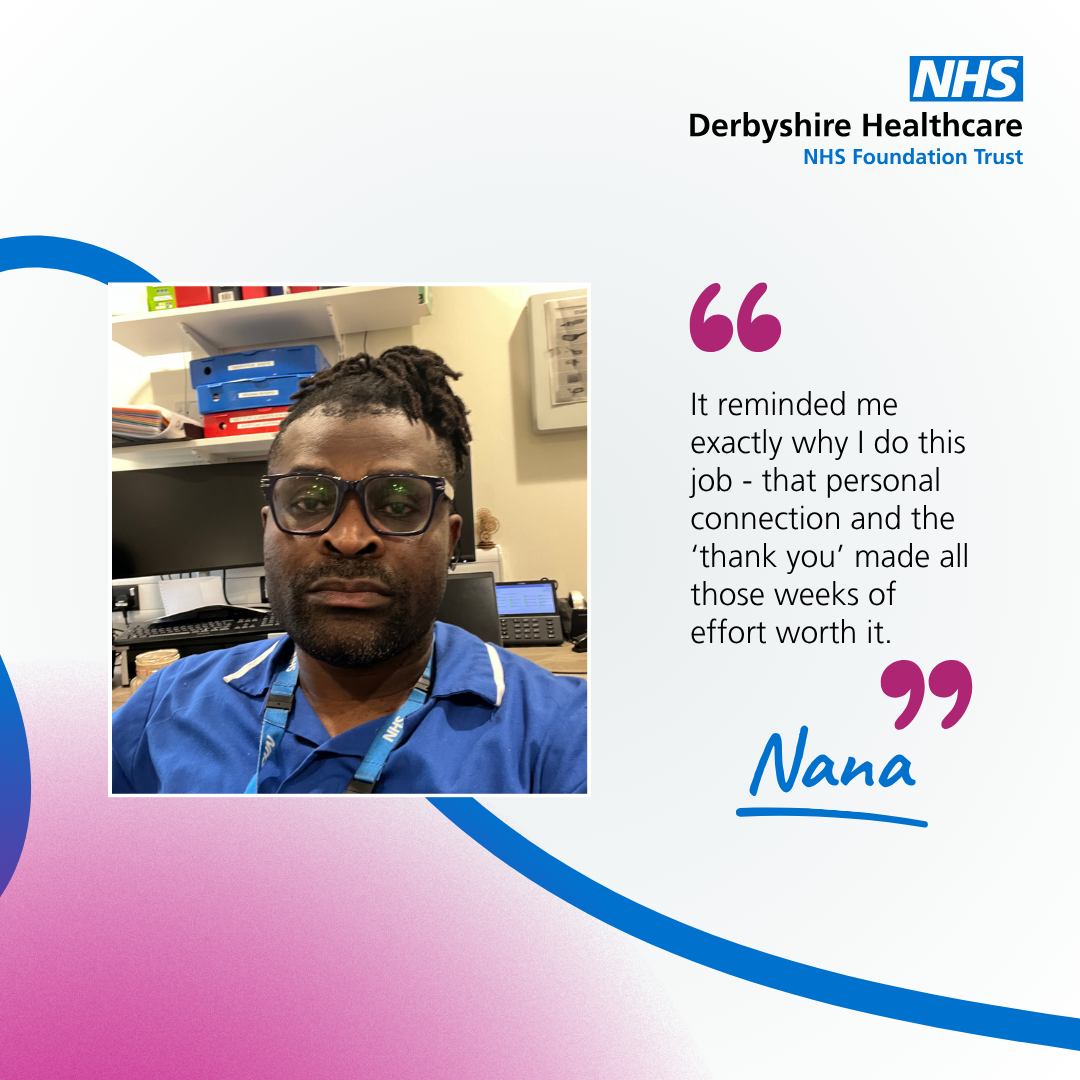
As part of this, the Trust is spotlighting Nana Karikari, mental health nurse at the Derwent Unit in Chesterfield. Nana explains how helping to connect individuals to get them onto a better much healthier path in life is what has made this career so rewarding.
How long have you been a nurse?
I've been a nurse for three years.
What inspired you to become a nurse?
For a decade, my life was immersed in the world of caregiving. As a support worker, I embraced every facet of the role, from the bustling energy of nursing homes to the more intimate settings of individual care. It was a period of profound learning, where I honed my skills in empathy, patience, and the practical art of making someone's day a little brighter, a little easier. I witnessed the spectrum of human experience, offering comfort, assistance, and a listening ear to those who needed it most.
During those 10 years, I encountered countless individuals, each with their own story, their own challenges, and their own unique spirit. It was through these direct interactions, the moments of shared vulnerability and trust, that my own path began to clarify.
One patient, whose name I hold dear, became a pivotal influence. I remember the day vividly. I was assisting them with their daily routine, offering the kind of attentive, compassionate care that had become second nature to me. As we spoke, they looked at me with a warmth and insight that stopped me in my tracks. With a gentle smile, they said, "You know, you have a real knack for this. You're so good with people. You will be a good nurse, a proud nurse."
Those words landed not just as a compliment, but as a profound revelation. It was as if a light switched on within me. I had always respected and admired the nurses I worked alongside, their expertise and dedication evident every day. But hearing that direct affirmation from someone I was caring for, someone who saw my potential through their own experience, was different. It wasn't just an observation; it was an encouragement.
That message – "you will be a good and proud nurse" – echoed in my mind long after our conversation. It resonated with the deep satisfaction I felt in providing care, with the genuine connections I forged, and with the inherent desire to do more, to contribute on a deeper level. It solidified a burgeoning aspiration into a clear decision.
Did you ever consider a different career? If so, why nursing?
Before I fully committed to nursing, I did explore a few other paths that also involved helping people. I was really drawn to fields like social work, where the focus is so much on understanding people's struggles and supporting them through difficult times. I loved the idea of being a listening ear and a source of support and I've always felt a deep empathy for others.
Can you tell us a bit about the training you undertook for your role?
To become a mental health nurse, I completed a nursing degree, specialised modules, supervised placements and maintain continuous professional development to stay updated with the latest advancements.
What's been the highlight of your career so far?
There are so many moments that feel incredibly special. But one moment stands out. For over a week, I watched as my patient consistently refused help.. I recognised that he was struggling to hold onto his independence, so I decided not to rush him or force the issue.
I chose to use a very patient and friendly approach. Instead of focusing only on the task, I focused on him. I spent time building trust, showing him kindness and making sure he never felt pressured or judged for saying no.
My persistence finally paid off because of the rapport I built. I made sure the experience was dignified and moved entirely at his pace.
After the patient had showered and got dressed for the day, he sincerely thanked me for my kindness. It felt incredibly rewarding to know that my patience had finally broken through his resistance. It reminded me exactly why I do this job - that personal connection and the ‘thank you’ made all those weeks of effort worth it.
What do you like most about being a nurse?
Working alongside dedicated colleagues who share the same passion for caring for others is incredibly motivating. You become part of a team that supports each other through the tough times and celebrates the successes together.
What's the most challenging part of being a nurse?
The toughest parts of being a mental health nurse involve the emotional strain and the responsibility for patient safety.
What are the main skills needed to do your role?
Critical thinking and problem-solving are essential for decision-making under pressure in combination with strong communication, empathy and teamwork abilities.
Do you have any advice for the next generation of nurses?
Prioritise lifetime learning and effective communication skills for aspiring nurses. To handle the emotional and physical pressures, develop resilience and self-care. Be an advocate for patients, identify your speciality and create a network of others who can help. Maintain order and never lose sight of your empathy. Utilise technology but put individuals before anything else.
Finally, remember your reason for pursuing this career – I chose mental health nursing because of a deep desire to connect with and support individuals on their journey towards healing and finding their strength again.
