
Published on: 22 April 2026
We recently supported a national conference held at the University of Derby about an important emerging topic for mental health services: dissociation. This is a term that has grown in popularity and become common in everyday language, but myths and misconceptions remain, some of which are potentially harmful.
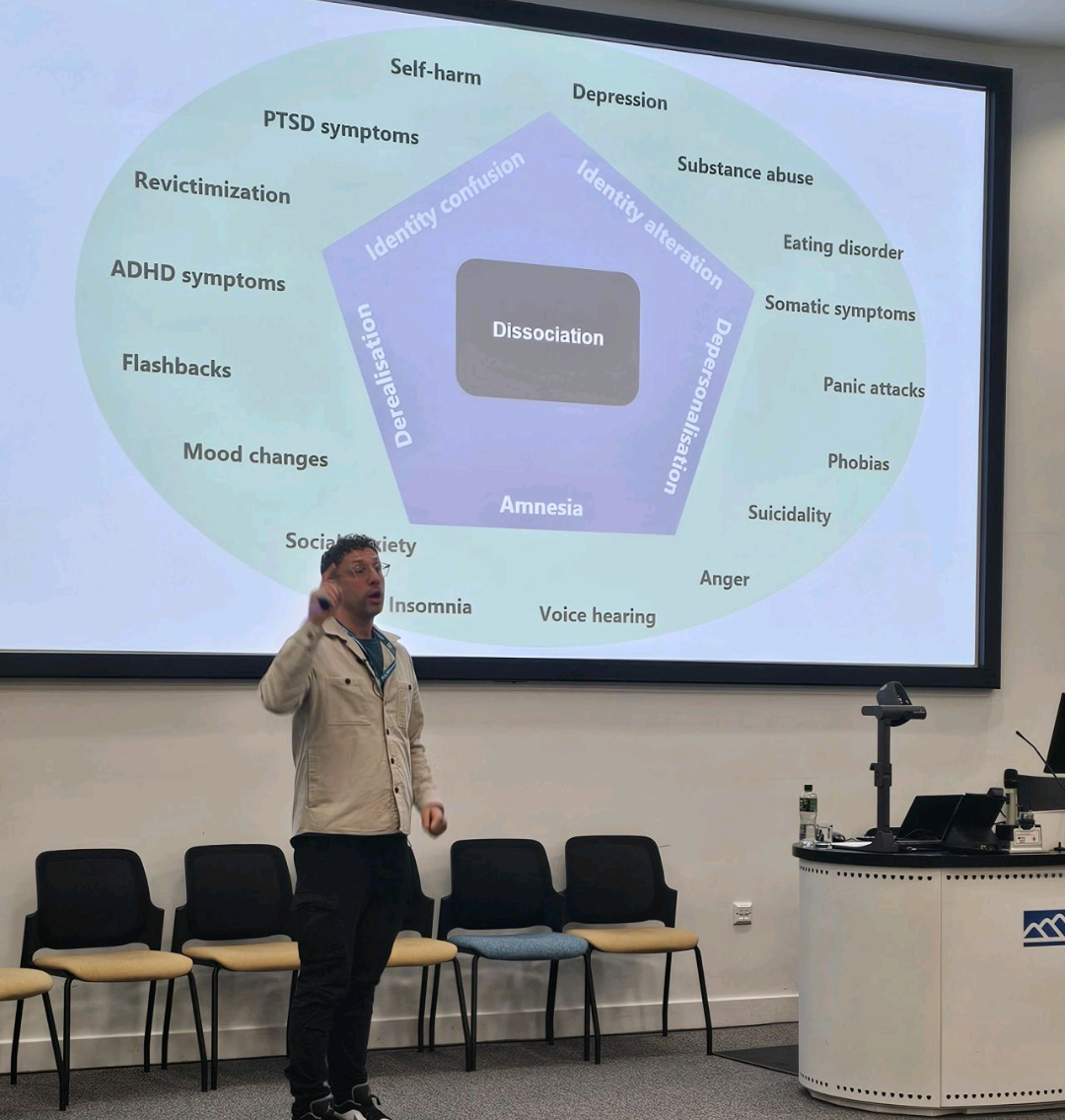
We’re fortunate to have an expert within the Trust on dissociation: clinical psychologist Dr Paul Langthorne (pictured), who has co-edited a new book about the topic and was a presenter at the Derby conference.
In the book Working with Dissociation in Clinical Practice, published by the Association of Clinical Psychologists-UK, Paul and his fellow editors Helena Crockford and Melanie Goodwin explain how advancements in neuroscience have validated dissociation as a real and measurable phenomenon. They describe dissociation as a complex survival mechanism in response to overwhelming trauma. The condition can manifest in many ways, some of which are fairly well known – feeling detached from your body or feeling that the world around you is unreal, for instance. But it can also involve less common experiences such as a sense of confusion about your identity, including sudden shifts in behaviour or identity as if you were a different person, and these shifts can be accompanied by memory loss or amnesia.
For those who experience long-term trauma, dissociation can become severe and entrenched, leading to poor physical and mental health outcomes.
The conference in Derby brought together a range of stakeholders and experts, including clinicians and people with lived experience, to consider the future of supporting people with dissociative difficulties in the UK.
At the conference, Paul and the other speakers discussed the benefits – both human and economic – of identifying and addressing complex dissociation and the importance of mental health professionals becoming more dissociation-informed in their work, so they can recognise and respond to dissociation effectively and reduce the long-term harm. Effective treatments for dissociation are based on a trauma-phased approach and a range of adapted psychological therapies, and they offer hope for recovery.
Learn more
To learn more about dissociation, you can listen to Trust psychologist Paul Langthorne and his fellow co-editor Melanie Goodwin on a recent episode of the podcast Healing My Parts, available on platforms including YouTube, Spotify and Apple Podcasts. You can also view a recording of the conference sessions on YouTube.
