
Published on: 20 February 2026
In recognition of Mental Health Nurses Day on 21 February 2026, Derbyshire Healthcare NHS Foundation Trust is honouring its committed team of mental health nurses by highlighting their contributions through providing insight into their professions. 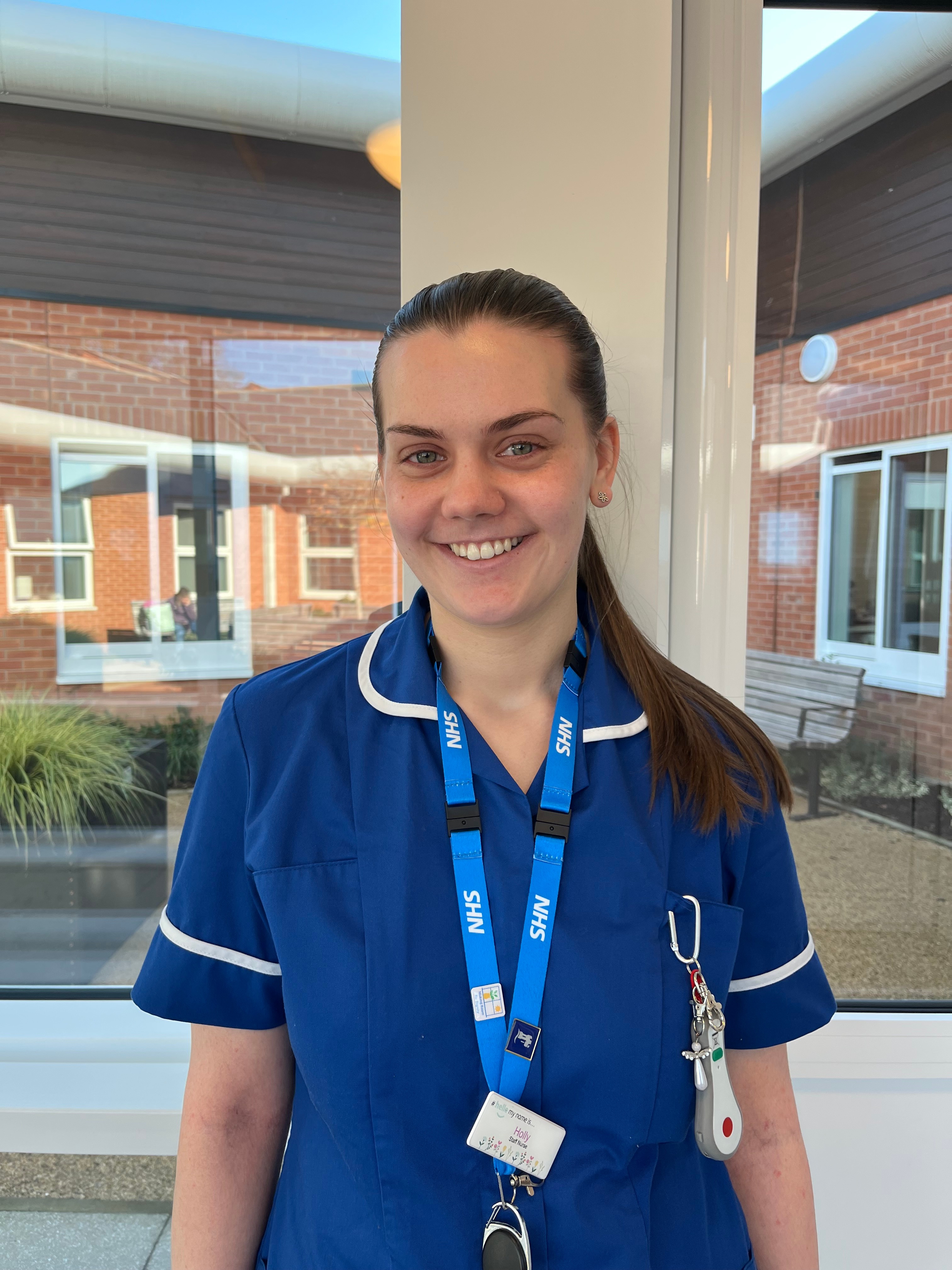
Holly Beckett – a mental health nurse at the Trust, discusses her experience as a nurse, as well as her personal experiences of loss and how her own mental health challenges inspired her to pursue mental health nursing, recognising the privilege of supporting people through vulnerable periods.
How long have you been a nurse?
I qualified as a mental health nurse in July 2025. I started my first nursing role in December last year, so I am three months into this role and thoroughly enjoying it!
What inspired you to become a nurse?
Throughout my childhood, nursing was never something I considered for my future career. Sadly, my mum and grandparents passed away as I began my GCSEs at the age of 14. This brought on my own battles with mental health; I found that focusing on my academic work was a big distraction from these struggles.
Towards the end of sixth form, I began my search for my career. I came across mental health nursing which immediately took my interest. Despite my limited experience of working in healthcare, I believed I had enough personal experience to encourage my success in this role.
My personal experiences have driven my passion and dedication to help those who are fighting their own battles. Unfortunately, mental health is likely to affect almost everybody throughout their lifetime. It is a privilege to meet people in a vulnerable state and be able to support and guide them through it.
Did you ever consider a different career? If so, why nursing?
During my search for a career, I considered whether I would enjoy occupational therapy. This career would have enabled me to restore people’s living skills encouraging them to have a better quality of life. However, I enjoy the focus on clinical and medical care that nursing offers, including risk assessment, symptom management, and medication management.
How did you get into this career?
At sixth form, I completed A-levels in English Language, Law and Psychology. I was dedicated to my studies, which encouraged me to perform well and achieve good grades in these subjects. This enabled me to attain enough UCAS points – UK qualifications of a numerical value, helping universities assess applicant suitability to courses – to attend my chosen university and study mental health nursing.
At times, my university studies felt overwhelming due to the high workload. I also lacked confidence because I didn’t have any experience of working in healthcare prior to my studies. Nevertheless, by asking for help when it was needed, staying focused and working hard, I was able to overcome most difficulties.
Overall, becoming a mental health nurse will always be one of my greatest achievements. My passion for mental health nursing guided my success in my studies, along with my dedication to continuously strive to provide holistic and patient-centred care.
Can you tell us a bit about the training you undertook for your role?
I attended a three-year course at university; this involved several mental health themed placements in the community and inpatient settings. I also completed assignments and a dissertation in relation to the mental health nursing degree.
What's been the highlight of your career so far?
The highlight of my career so far would be starting my first nursing job. My first day on the ward was welcoming and exciting, settling into a team with so much knowledge has been fascinating. The supportive and encouraging environment has provided me with an incredible start to my nursing career. The ability to learn amongst such knowledgeable and skilful people has encouraged me to thrive in a supportive environment and strengthen my nursing practice.
What do you like most about being a nurse?
My favourite aspect of being a nurse is helping people to smile and being able to make a positive impact on patients’ lives during their most vulnerable moments. I enjoy building therapeutic relationships and being able to support patients in their recovery. From meeting patients at the door, providing support in high distress situations and celebrating progress, it’s remarkable to watch these people recover and feel more like themselves again.
To watch patients overcome their troubles and achieve milestones is so rewarding. There is no other career that could provide me with such fulfilment, knowing I have played a part in changing someone’s life for the better will always bring me such deep satisfaction. The ability to learn life stories of inspiring individuals, and work with them to build meaningful connections is what keeps me motivated to provide holistic patient-centred care.
What's the most challenging part of being a nurse?
Sadly, nursing does comes with many challenges. Since being newly qualified, I have found my lack in confidence challenging. From starting my degree with little healthcare experience, to finishing my degree as a qualified nurse, my confidence where I would like it to be. There is always new skills to learn as a nurse, continually reflecting on what I have learned has helped me to increase my confidence in my practice. I have also found that having a supportive working environment and attending supervision has helped to increase my confidence in different areas.
What are the main skills needed to do your role?
Overall, being a mental health nurse requires a variety of skills including strong interpersonal skills, clinical knowledge, and emotional resilience. Resilience is especially important in this role as it is a highly stressful job and can be emotionally exhaustive.
A fundamental role of a mental health nurse is being able to de-escalate distressing situations. Key skills include actively listening, empathy, effective communication and sound judgement. Nurses must be able to remain calm under pressure, maintain safety, and care for complicated individuals, sometimes in unpredictable environments.
Do you have any advice for the next generation of nurses?
For individuals training to be a nurse, I would advise to keep going! The journey of becoming a nurse is extremely difficult and emotionally exhausting at times, but so rewarding and worth it in the end.
It is important to take care of yourself; you can’t provide patient-centred care when you’re not looking after yourself first. I would advise to Make the most of time management, ensure you have time for self-care, getting enough rest, and for things that you enjoy.
I would advise future nurses to enjoy the training journey and make the most of the opportunities to learn. There is no such thing as a silly question, these questions better your practice and the care you can provide. The nursing field is constantly evolving and there are always new things to learn.
Finally, remember your reason for pursuing this career – nobody falls into mental health nursing, we all have our own reason to be here. At times, it can be tough but the difference you make will always make it worthwhile.
