
Published on: 20 February 2026
Ahead of Mental Health Nurses Day on 21 February 2026, Derbyshire Healthcare NHS Foundation Trust is honouring its committed team of mental health nurses by highlighting their contributions through providing insight into their professions. 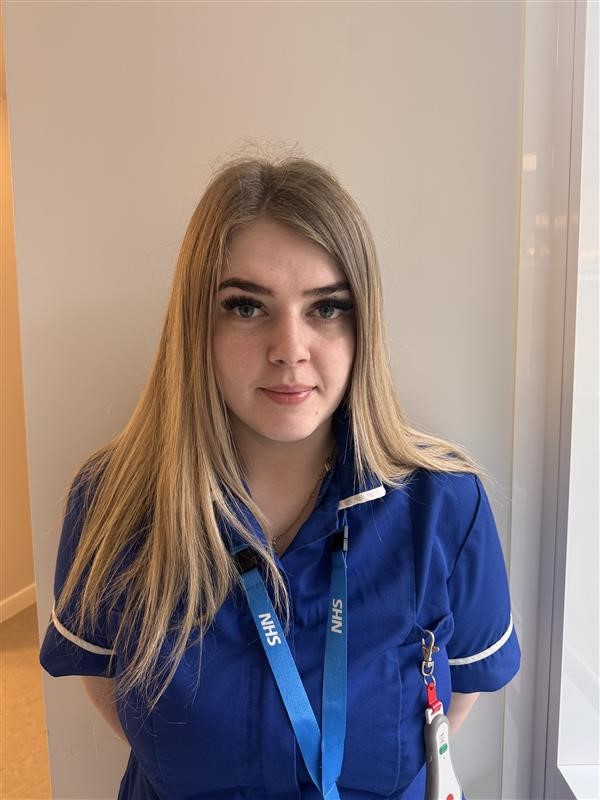
Jorja Herbert, a mental health nurse at the Trust, discusses her experience as a nurse and how fulfilling it can be to do a job you enjoyed.
How long have you been a nurse?
I have been practicing as a mental health nurse for around 2 and a half year now.
What inspired you to become a nurse?
Anyone who comes into nursing must have a desire to help others, having a career that allows you to make a difference to others is special, it drives you to show up every day. One of my main inspirations in becoming a nurse was my son. I wanted to be a role model for him; show him that work can be enjoyable and rewarding. That you can make a difference to others. I want him to experience the same one day in whatever career path he chooses.
Did you ever consider a different career? If so, why nursing?
I have always wanted to help others, I wanted to be a nurse early into my college years. At one point I was stuck between what nursing I wanted to do, either learning disability nursing or mental health nursing. I think through exposure to both types of nursing through college placements and volunteer work allowed me to choose what career path was right for me. Being exposed to both types of nursing expanded my knowledge and skills which have been transferable throughout my career.
How did you get into this career?
During my school years I experienced adversity. I didn’t put effort into my studies. A lot of my teachers at the time did not think I would achieve much following school. Despite this, with a lot of love and support from my family, who consistently reminded me of my potential, I did well in my GCSE’s and went on to study health and social care Level 3 at college. During college, I had my son, I grew as a person and figured out what was important to me. I worked hard and put effort in to get the grades I needed to further my learning and career.
Following this, I went on to study mental health nursing at university. I stayed dedicated throughout the 3 years and eventually got my degree in mental health nursing. This was the most rewarding experience after the hard work and commitment to achieve my goals.
Can you tell us a bit about the training you undertook for your role?
I completed a three-year training course at University of Derby in mental health nursing. During which I complete numerous placements, including physical and mental health. These were based across community and inpatient settings.
Alongside this, I completed a range of exams and assignments related to mental health nursing. All students also have to complete a range of mandatory training, either online or face to face to ensure have the knowledge and skills needed for the role.
What's been the highlight of your career so far?
Pinpointing one exact highlight is hard, there are numerous aspects of my career that have been fulfilling. I think the main accomplishment is when you make a positive impact with each patient you work with. In my job setting you work with a range of individuals who all have different care needs, tailoring care to them and seeing their improvement is very rewarding, it’s fills you with a sense of purpose.
Why is it important to have a job you enjoy?
People spend a lot of time at work, so enjoying what you do is necessary. I love my job, the team I work with are fantastic, everyone does their part to support one and other. Enjoying your job not only strengths staff wellbeing but also enhances better patient care. Being passionate and caring about your job reflects on the care you give to others, it makes staff more present and compassionate towards the patients.
What do you like most about being a nurse?
I enjoy having a workplace where I can make a positive difference. Whilst being a nurse is a demanding job, it is also incredibly rewarding. Being able to care for people when they most need it and seeing them recover is so fulfilling.
What's the most challenging part of being a nurse?
Working in an acute inpatient setting, things are always changing, nurses have to adapt daily and prioritise tasks based on need. This can be challenging at times, though, it encourages resilience. Having a good team around you who all go above and beyond their role makes this easier. Everyone helps each other to provide the best care to the patients, I always know I’m not alone at work.
What are the main skills needed to do your role?
There are numerous skills needed for the role. One skill that can’t be taught but the most important is having compassion. A lot of the time in nursing you are working with vulnerable people. Being able to develop trusting therapeutic relationships through listening, hearing and understanding is vital.
Being able to offer a safe and therapeutic environment to those in need is a skill needed to ensure that patients do not feel anxious or threatened. For patients, being admitted to a psychiatric ward can be a daunting experience. And so, it is important that nurses are both friendly and approachable.
Do you have any advice for the next generation of nurses?
If you have the determination and the compassion to support people when they are vulnerable, you already have some of the key attributes of a nurse.
Having good communication skills are vital in nursing, it ensures that both patients and staff members can understand one and other, this minimises the potential for miscommunication and misunderstandings.
