
Published on: 12 May 2026
In recognition of International Nurses Day on 12 May, Derbyshire Healthcare NHS Foundation Trust is honouring the commitment, professionalism and contributions of its nursing staff. The annual awareness day recognises the vital role nurses play in supporting patients through some of the most challenging moments in their lives. 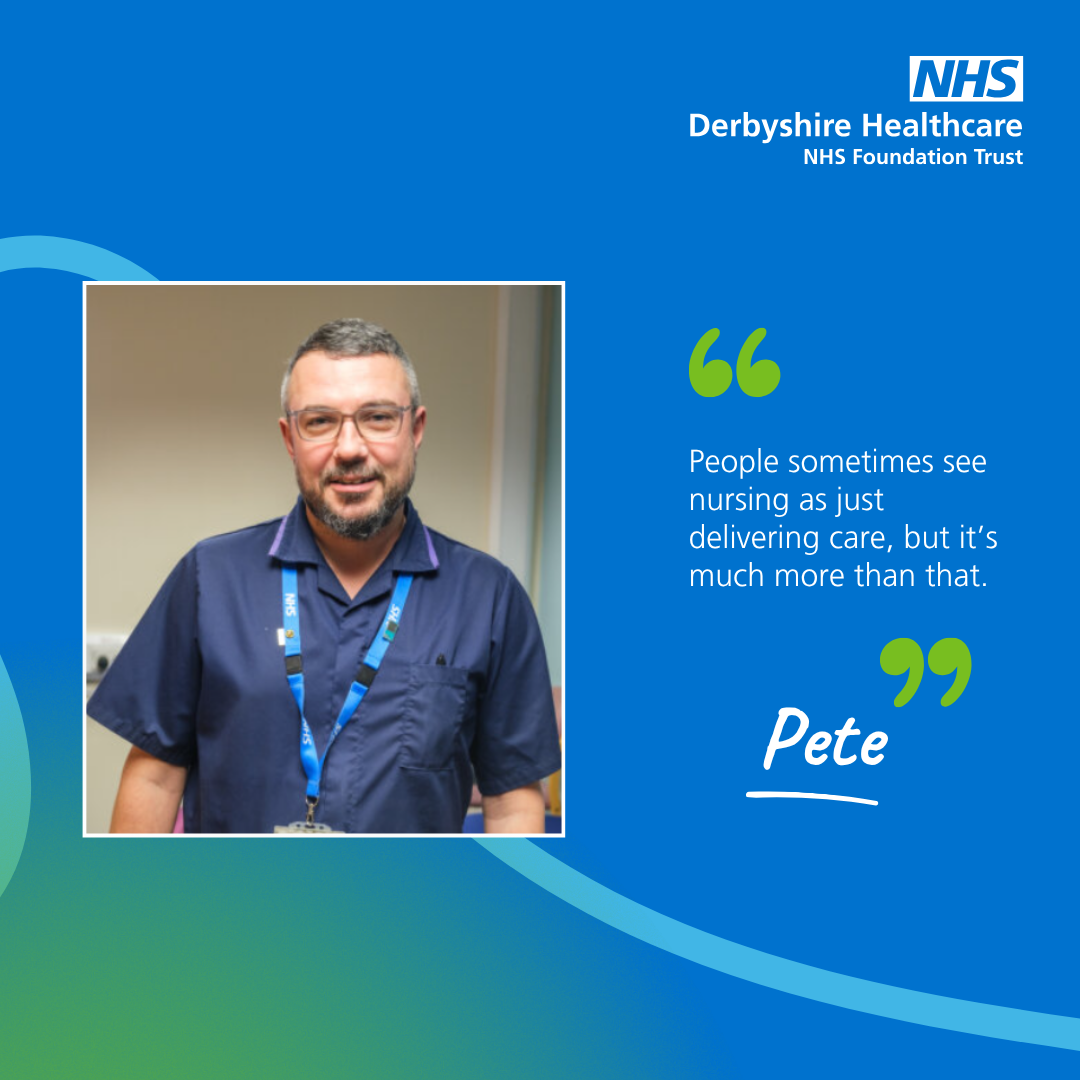
As part of this, the Trust is spotlighting Pete Collumbine, previously a Matron at the Derwent Unit in Chesterfield and now based as a Clinical Matron at the Carsington Unit and Radbourne Unit, both in Derby. Pete shares insight into his role within mental health nursing and the importance of working together to provide a quality service for those in his care.
How long have you worked in nursing, and where did your career begin?
I started in nursing as a bank support worker in 2008 on inpatient wards at the Hartington Unit ib Chesterfield. I really enjoyed that experience, which led me to train at Sheffield Hallam University. After qualifying, I’ve now worked in the Trust for around 15 years.
I started as a staff nurse on Pleasley Ward, then became lead nurse, followed by clinical lead for older adults and then for the whole unit. I later worked as a matron at the Hartington Unit and then the new Derwent Unit before moving to Derby, where I now work as a Clinical Matron.
What has been the most rewarding part of your nursing journey so far? Is there a moment in your career that you are particularly proud of?
It’s difficult to pick just one highlight. There have been a few, particularly when I’ve been in leadership roles during challenging situations where acuity has been high. I’ve tried to remain calm, maintain safety on the ward and support the team. The pandemic was also a big period in nursing. It was a very different and challenging time, and I felt I supported the team well through that.
Can you describe your current role and what a typical day looks like?
As a Clinical Matron, I provide oversight of inpatient wards, so the focus is very much on quality, safety and performance.
A typical day includes supporting ward teams, reviewing incidents, liaising with multidisciplinary colleagues and being involved in governance processes.
What difference do you feel your role makes to patients or colleagues?
I think my role is about maintaining high standards of care and supporting staff, as well as making sure we learn from incidents and embed that learning into practice. Ultimately, that helps to make the wards safer and improves patient experience.
What helps you stay motivated during busy or difficult periods?
For me, it’s knowing that the work we do has a direct impact on people’s lives. At the end of the day, nursing is about looking after patients, and that’s a strong motivator.
Teamwork is also a big part of it. Inpatient settings can be challenging, but the teams are resilient, and that comes from good teamwork.
How do colleagues and teams support each other where you work?
There’s a strong culture of mutual support and collaboration, both in Chesterfield and Derby. Teams support each other through reflective practice, shared learning and addressing challenges together. We try to create an environment where people can learn, grow, and feel supported.
What makes you proud to be a nurse at this Trust?”
The Trust prioritises quality improvement, patient safety and staff development. Even though times can be challenging, there’s still a strong commitment to those areas. The dedication of colleagues and the focus on delivering compassionate care is something I really value.
What does International Nurses Day mean to you?
I think it’s an opportunity to recognise the contribution nurses make, both in the UK and globally. It’s also a good time to reflect on the impact nurses have on patients, carers and communities.
What would you like people to better understand about the nursing profession?
I think people sometimes see nursing as just delivering care, but it’s much more than that. It involves a lot of quick decision-making, especially around risk, as well as critical thinking and leadership.
You’re also constantly learning – you never get to a point where you know everything. It’s a highly skilled and complex profession.
What difference do you feel your role makes for patients?
I think it’s about maintaining high standards of care and supporting staff, as well as making sure that learning from incidents is embedded into practice. That helps to make the wards safer for patients.
What excites you about the future of nursing?
There’s a lot happening in terms of innovation and professional development. There’s also a growing focus on digital technology, which will support and improve patient care.
In mental health particularly, there are always new models of care being developed, which is positive for the future.
What would success look like for you over the next few years?
Success would be about continued improvement – especially in patient safety and patient experience. It’s also about supporting strong, resilient teams and continuing to enhance the quality of care we provide.
