
Published on: 9 October 2026
To mark World Mental Health Day, Derbyshire Healthcare NHS Foundation Trust is sharing a series of stories from colleagues and people with lived experience, highlighting the importance of talking openly, feeling understood and finding the right support.
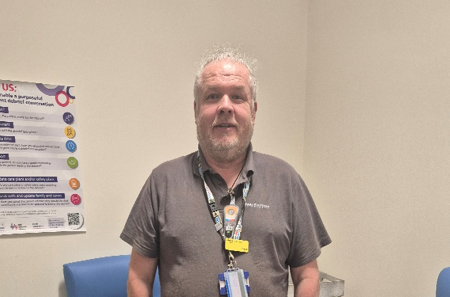
David Mellors, a Peer Support Worker at Kingfisher House, supports people with acute mental health needs who require intensive inpatient care. David shares how his own recovery journey now helps him support others and why speaking up can be an important first step.
Can you tell us about yourself and your role?
I’m a Peer Support Worker at Kingfisher House, where I use my own lived experience alongside professional guidance to help people build resilience, explore coping strategies and find their own path to wellbeing. When I am not at Kingfisher House, you can find me enjoying social activities and looking forward to the future. If you are navigating your own struggles, I am here to walk alongside you.
What led you to become a Peer Support Worker?
I know first-hand what it feels like to experience serious mental health difficulties. After 27 years in the British Army and six operational tours, my mental health deteriorated significantly following my return from Iraq and worsened when I left the forces in 2017. Support from loved ones, NHS therapists, my GP and specialist services helped me gain the understanding and tools I needed to move forward. My recovery now gives me a strong sense of purpose and helps me connect with others who may be facing their own challenges.
Why is it important to talk about mental health?
Talking can stop problems from becoming bigger. It can help people feel less isolated and make it easier to reach the support they need. You do not have to have everything worked out before starting a conversation; being honest about how you feel can be an important first step.
What difference can peer support make?
Peer support can show people that recovery and a fulfilling future are possible. Lived experience can help create trust and understanding, while practical encouragement can support people to discover strategies that work for them.
What would you say to someone who is struggling?
You do not have to face things alone. Speak to someone you trust and take support one step at a time. I know how difficult it can feel, but with understanding, the right support and practical tools, it is possible to move forward and look to the future.
